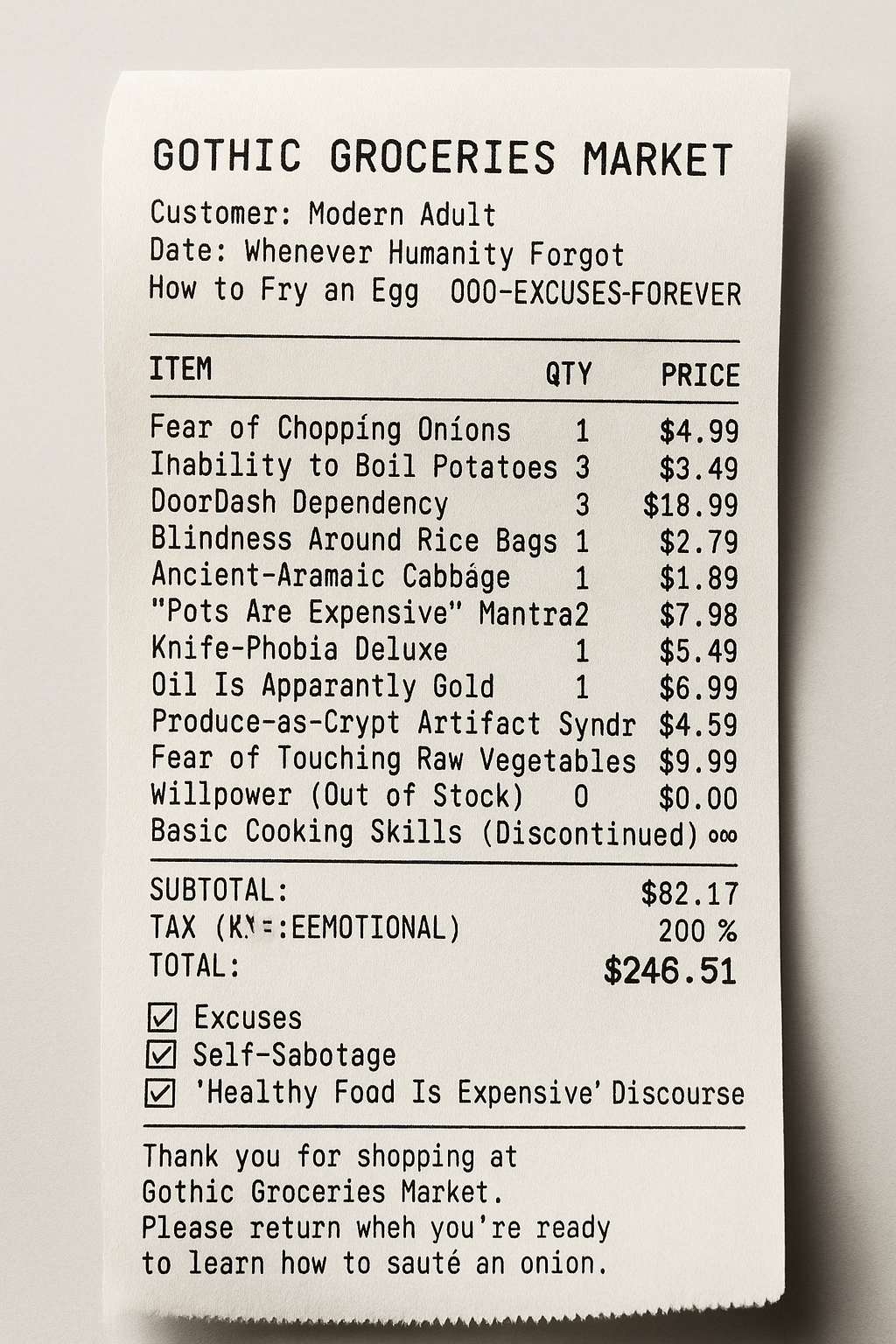
The Unspoken Invoice
Dry begging is a form of emotional manipulation.
It allows a person to make someone else feel responsible for solving a problem without ever having to ask for help directly. The request is hidden inside a complaint, a sad observation, or the carefully timed mention of a financial hardship. If someone offers, the dry beggar gets what they wanted. If no one offers, they can become resentful. If confronted, they can always say, “I never asked you for anything.”
Many years ago, my friend Ellie invited me to her housewarming party. She and her husband, Robert, had spent eight years working overtime, skipping vacations, paying down debt, and saving for a home. I had ordered their housewarming gift months earlier, as soon as I learned they had closed.
The house was beautiful. The living room had leather couches, warm tones, and hunter-green walls. The kitchen incorporated salvaged wood from an old church, and the library was the kind of room that made you consider abandoning the party altogether. Robert, a master carpenter, had completed much of the woodwork himself. Ellie had thrifted most of the furniture.
Nothing about that house had fallen into their laps. Every room reflected years of planning, sacrifice, patience, and labor.
While helping myself to some potato salad, I ran into Ellie’s friend and colleague, Ruby. I had met her a few times before. We exchanged pleasantries and sat together. I liked Ruby. She was intelligent.
“The carpentry is beautiful,” I said. “Especially the woodwork near the staircase.”
“Yeah, they got a good deal on the house,” Ruby replied. “It was a foreclosure.”
“They were able to put more money into making it their own,” I said. “Robert did most of the work himself.”
“Must be nice,” she said. “I’m still paying off my student loans.”
I reminded her that Ellie had paid hers off before she and Robert even began looking for a house.
“Still,” Ruby said, glancing around the room. “Her husband is a carpenter. I’m sure he knew people who did things for next to nothing.”
“Are you suggesting that Robert underpaid people?”
She immediately softened it.
“Of course not. I’m just wondering how they afforded all this.”
They had afforded it through eight years of work and sacrifice, which Ruby knew. She simply did not want the answer to be that ordinary. Hard work would mean Ellie had earned the life Ruby was standing inside. A secret advantage would make it easier to dismiss.
I avoided Ruby for most of the evening.
Later, after nearly everyone had left, I stayed behind to help Ellie clean the kitchen. Ruby walked in as we were putting away the remaining food.
“You guys really did a phenomenal job,” she told Ellie. “It must be so nice to be able to afford all of this.”
“It took a lot of sacrifice,” Ellie said.
Ruby picked up one of the trays and slid it into the refrigerator.
“Anyway, I have to take my car in tomorrow. I have no idea what’s wrong with it or how much it’s going to cost. I’ll probably have to wait until payday to eat.”
There it was.
She had not asked Ellie for money. She had not requested a loan, a meal, a ride, or even practical advice. She had simply announced, inside the home she had spent the evening calculating and questioning, that she might soon be unable to afford food.
Ellie immediately offered help.
“Do you want Robert to take a look at it? It may be something simple.”
“No, I’ll be fine,” Ruby said.
The offer did not relieve Ellie. Her face fell after Ruby left the room. She stood at the sink drying the same plate much longer than any plate needed to be dried, staring somewhere beyond the kitchen wall.
Ruby had said she would be fine. She had also made sure Ellie would spend the night wondering whether her friend was going hungry.
I should mention that Ruby owned her own townhouse and, according to her, earned more than Ellie. Owning property and earning a decent salary do not necessarily mean someone has money readily available. People have debt, private expenses, and financial problems they do not advertise.
Well, most people do not advertise them.
At the time, I decided that perhaps I had judged Ruby too harshly. Maybe she had been having a bad day. Maybe her car was about to collapse into a pile of bolts in the mechanic’s parking lot. Maybe she was dealing with a financial situation she had told no one about.
Eventually, I stopped thinking about her and that evening altogether.
Around Christmas, a group of us made plans to have drinks at The Plaza Hotel. Ellie was coming with Ruby and two other friends. Beforehand, we had all agreed that each person would pay for their own drinks and contribute toward the tip.
When I arrived, Ellie introduced me to the two women I had not met before, and I hugged Ruby. For the next hour, we drank, laughed, and had a wonderful time. I decided that I had definitely misjudged her at the housewarming. Again, I liked Ruby.
Then the bill came.
Each of us placed a card on the table except Ruby. She picked up the check, studied it, and said, “Oh no, don’t worry about me. I’ll pay my part. I’ll just have to move some things around and hope nothing else comes up.”
No one had expressed concern.
No one had offered to pay.
No one had even asked her a question.
Still, she wanted to assure us that we did not need to worry about her.
I could not contain myself. Maybe it was the alcohol.
Nah. I am a loudmouth.
“Ruby, honey, why didn’t you say something when we made the plans?”
“What are you insinuating?” she asked, glaring at me.
Good.
“Nothing, really. You seem surprised, and I am surprised that you seem surprised.”
“Ruby, I’ve got it,” Ellie said.
There it was again.
“I don’t want you to get it,” Ruby replied. “I just find it a bit pricey. I have a right to express my opinion.”
One of the other women looked at her.
“That was not an opinion. You’re in academia. You should know the difference. If you’re having financial problems, you could have just said something. We are all grown adults here.”
“This is very authoritarian,” Ruby said. “God forbid a woman expresses her opinion.”
Ellie was becoming embarrassed. I could see the color rising in her face.
“Well, we have to leave,” I said. “Let’s pay the bill and stop keeping the waitstaff waiting. I have another engagement after this.”
Ruby finally took out her card, and I flagged down the waiter. We paid and left.
As time went on, I learned that these were not isolated incidents between Ruby and Ellie. This had become a common feature of their friendship. I had simply never been present at the right moment to recognize it.
Ruby would mention a bill, a repair, an unexpected expense, or some financial inconvenience. She would never directly ask Ellie for anything. She would just place the information in front of her, carefully wrapped in distress, and wait.
Ellie, being Ellie, would offer.
Sometimes it was money. Sometimes it was a meal. Sometimes it was Robert’s time and labor. Ruby rarely requested any of these things outright. She merely created a situation in which refusing to volunteer them felt unkind.
Over the years, Ellie quietly began pulling away from the friendship. There was no dramatic confrontation, no public falling-out, and no friendship tribunal convened in the faculty lounge. She simply stopped making herself as available.
She had finally begun to recognize the manipulation for what it was.
I no longer believed Ruby was jealous of Ellie. Jealousy would have been much simpler. Ruby had developed a method, and she used it well.
For a woman in academia, she was remarkably skilled at communicating through implication and then pretending not to understand how language worked.
She could analyze complicated texts, identify hidden meanings, explain context, and presumably recognize subtext when it appeared in literature. Yet whenever she announced that paying for one drink might destabilize her entire household, she became baffled that anyone detected an implied request.
Plausible deniability may have been her area of independent study.
That is what makes dry begging manipulative.
A direct request gives the other person something concrete to answer.
“Can you lend me fifty dollars until Friday?”
“Would you mind paying for my drink tonight?”
“I cannot afford this restaurant. Could we choose somewhere else?”
Those questions may be uncomfortable, but they are honest. They give the other person the dignity of knowing what is being requested and the freedom to say yes or no.
Dry begging avoids that honesty.
It is the deliberate placement of a need, hardship, or disappointment into someone else’s hands, followed by enough plausible deniability to insist that no request was ever made.
“I’ll pay. I just won’t be able to eat until payday.”
“I would love to go, but I could never afford something like that.”
“My car is making that noise again. I have no idea how I’m going to get to work.”
“I don’t need anything for Christmas. I’m used to going without.”
The dry beggar does not ask. They create an atmosphere.
The listener must then interpret the distress, identify the desired solution, make the offer, and absorb the guilt if they choose not to. The entire transaction takes place without the dry beggar ever risking the humiliation of hearing the word no.
If the offer comes, they receive the benefit.
If it does not, they can resent you for failing to understand.
If you confront them, they retreat behind the same defense Ruby used at The Plaza.
“I was only expressing my opinion.”
“I never asked you for anything.”
“You offered.”
Technically, all of those things may be true.
That is what makes the tactic effective. The manipulation is built around making the other person feel as though the decision was entirely their own.
The request remains unspoken because saying it aloud would reveal the transaction. A direct request could be declined. An emotional performance makes declining feel cruel.
The dry beggar does not send an invoice with a clear amount and a due date. They leave it sitting in your mind. You are expected to calculate the balance yourself.
Ellie eventually learned that every mention of Ruby’s financial distress did not require a response. Every uncomfortable silence did not need to be filled with an offer. Every emergency described in her presence did not automatically become hers to solve.
She stopped opening the envelopes.
Ruby never asked why.
Perhaps she already knew.
**Author’s Note**
In Journal Entries, I record reflections on money, work, value, choices, and the personal stories behind the numbers.