We Need to Start Calling People Stupid Again

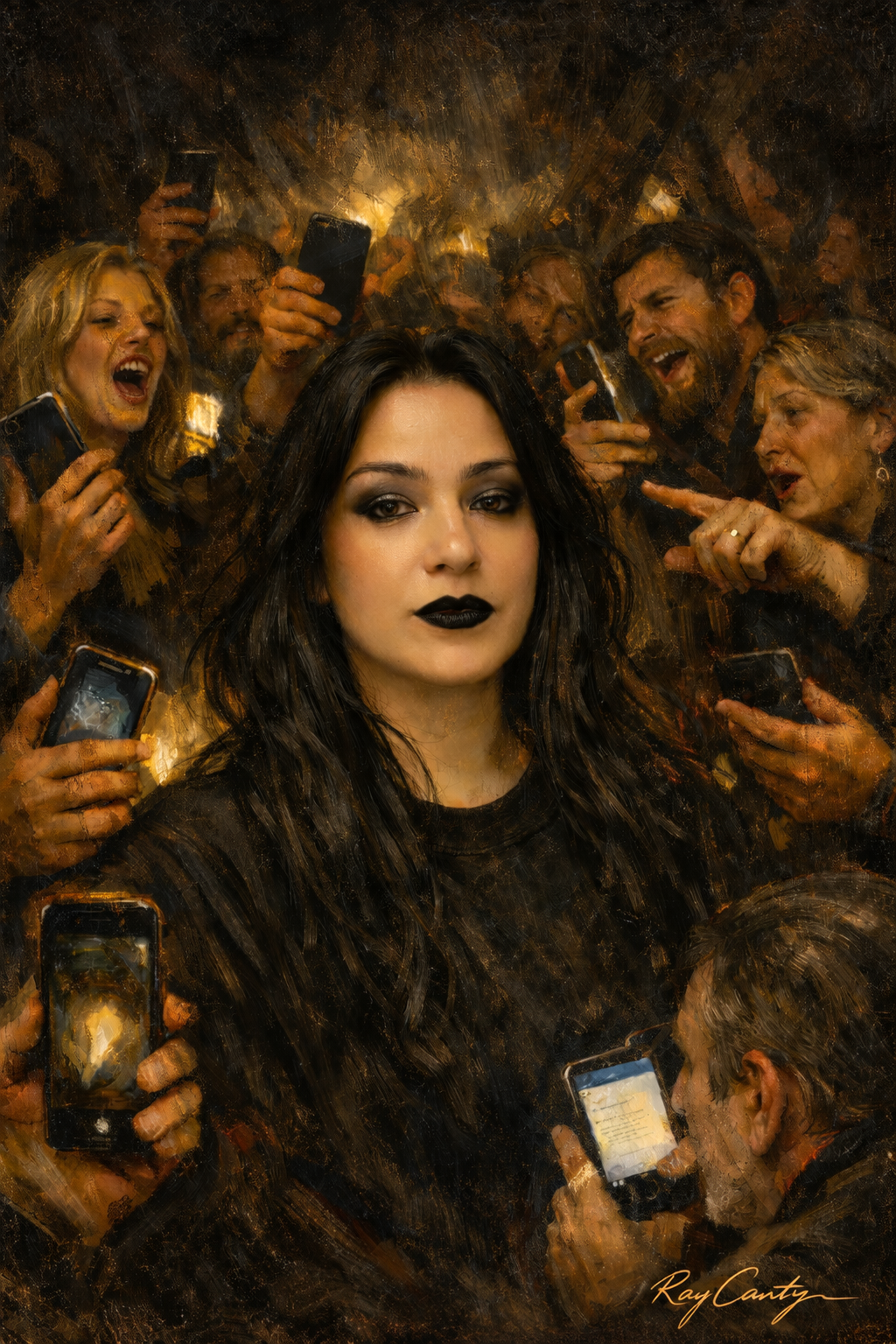
I find myself living in a strange moment in history where access to information has convinced many people that they possess expertise. A few searches here and there, a skim of a couple of articles—which I’m fairly certain most people don’t read properly anyway, because let’s be honest: people don’t read for comprehension anymore. They read for validation. Or maybe they watch a short video explanation that very few people actually make it to the end of. Suddenly, people with the attention span of a houseplant speak with the same confidence as those who have spent years studying a subject.

Searching, it turns out, is not the same thing as understanding.

God forbid you tell them that real expertise has always required something more demanding than curiosity and a search engine. Historians spend years learning how to read primary sources, understand historical context, and interpret conflicting accounts. Physicians train for years before diagnosing even the most common conditions. Scientists spend decades learning the methods that allow them to distinguish correlation from causation. Writers spend years learning how to research, structure arguments, and communicate ideas clearly. Yet the internet has loudly encouraged a cultural shift where familiarity with information is mistaken for mastery of it.

I experienced a small version of this temerity recently. After my father passed away early last year, my body began reacting in ways I had never experienced before. Insomnia returned like an old acquaintance who never learned how to leave. Night sweats felt like waterboarding sessions conducted by my own paralysis demon. Crying outbursts appeared out of nowhere—sometimes in the middle of a Macy’s cosmetic department.

To be fair, some lipstick swatches are criminal.

I should also mention that I’m not normally a crier.

The loss of simple pleasures, the inability to function like the well-oiled Victorian steam train I had previously convinced myself I was—it all started to add up. Grief, as it turns out, doesn’t just live in the mind. It often manifests physically.

After running a few tests, my doctor concluded that I was dealing with anhedonic depression. The tests came back normal. Human, even. Once treatment began, the physical symptoms gradually disappeared. I can’t deny that my body and face changed during that time, but I’m almost back on track now.

Anyhoo.

During this period, one friend became absolutely convinced she knew what was happening. Her first diagnosis was perimenopause. When that theory didn’t quite stick, the diagnosis quickly pivoted to PCOS. Yes—PCOS, the magical word women have been using the last couple of years to explain every symptom and inconvenience under the sun. The interesting part is that I was already under medical care and had discussed everything with my doctor.

Now, before someone’s polyester panties twist themselves into a catastrophic knot, let me say this clearly: there is nothing wrong with caring about someone’s health or asking questions. Concern is human. But there is a difference between expressing concern and insisting on a diagnosis after someone has already told you they are comfortable with the care they are receiving. Eventually, I had to tell her to back off because subtle hints, polite deflection, and my most reserved and couth responses were apparently not getting through.

This is what the internet has produced: the confident amateur. Someone who has gathered enough fragments of information to feel authoritative, but not enough depth to understand the limits of their knowledge.

And frankly, I think this is where we’ve gone wrong culturally. Somewhere along the way, we decided it was impolite to tell people when they are simply out of their depth. Instead, we nod politely while someone with fifteen minutes of Google research explains medicine, history, economics, or whatever topic they discovered that afternoon. We replaced honesty with endless politeness.

But sometimes the problem isn’t a difference of opinion. Sometimes the problem is that someone is being stupid. Not cruelly stupid. Not maliciously stupid. Just confidently, aggressively uninformed. And occasionally that deserves to be called what it is.

Because there is a difference between curiosity and competence. The internet has made the first easier than ever and the second somehow rarer. Access to information is one of the greatest achievements of the modern world. We carry the sum of human knowledge in our pockets. Unfortunately, we also carry the illusion that skimming that knowledge somehow makes us experts.

The internet is a remarkable tool. It can help you find information in seconds and expose you to ideas you might never have encountered otherwise. What it cannot do is replace years of study, training, experience, and intellectual humility. Historians still study sources. Doctors still study medicine. Scientists still study data. Writers still study language and ideas. Google studies your search history so it can sell you magnesium supplements and hormone-balancing tea.

Curiosity is admirable. Asking questions is healthy. Suggesting possibilities out of concern is human. But when someone tells you they are already under professional care and comfortable with that care, the respectful response is not to double down on your internet diagnosis. The respectful response is to step back.

And occasionally—when someone refuses to step back and insists on lecturing others about subjects they clearly do not understand—it may be time to revive a lost social skill: telling people they are being stupid.

Politely, if possible. Directly, if necessary.

The Violence of Silence: An Autopsy of a Vanishing Friend

Coffee is more than caffeine. It’s a ritual, a gesture, and a litmus test for generosity in an age of ghosting, swipes, and emotional bankruptcy.

On today’s episode of “How can I use mental health to justify my terrible behavior?”

Oh — did that offend you?
Good. Sit down. Let the candlelight flicker while you clutch your amethyst and mutter affirmations about your “boundaries.”

The New Spiritual Practice of Disappearing

When did it become normal to vanish into the night the moment life becomes inconvenient?
When did disappearing become a spiritual practice?
When did silence become the new love language?

We now live in an era where ghosting is marketed as self-care and avoidance is advertised as emotional intelligence. You send a message to someone you consider a friend and it takes them three to seven business days just to open it.

Apparently that’s “healing.”
Apparently you expecting basic communication is “toxic.”

Meanwhile they’re posting online every hour like Victorian ghosts rattling chains for attention.

You start wondering:
What did I do? Why am I being punished? Why am I being exiled to the outer darkness like a biblical pariah?

Let me answer that for you:
Absolutely nothing.
No wait — I’m wrong.

You did do something.

You were too understanding the first time.
Too forgiving the second time.
Too patient the fifteenth time.

You kept giving grace to someone who didn’t deserve that much of your spirit. You wanted to be the compassionate friend because you knew they “shut down” during episodes of depression, anxiety, spiritual crises, lunar cycles, Mercury retrogrades, and whatever else they blamed it on.

But eventually it becomes a pattern.
And God forbid you say anything. Suddenly they have “boundaries.”

My dear children of the night, it’s not boundaries.
It’s guilt-dodging wrapped in therapeutic jargon.

Why They Can Post but Still Not Answer You

Here’s the part nobody talks about:

Avoidants can post online, repost TikToks, dance on Instagram, comment on memes, scroll for hours… and still “not have the capacity” to answer you.

Why?
  • Posting online gives them dopamine without vulnerability
  • Scrolling requires no accountability
  • Public engagement doesn’t force honesty
  • Responding to you requires facing guilt and connection

You represent real intimacy. Online, they can stay superficial and safe.
With you, they’d have to be human.

Compassion Isn’t a Coffin

Before the armchair therapists rise from their Instagram altars, let me make something clear:

I am not heartless.

I have held trembling hands at 2 a.m.
I have listened to friends unravel like cheap thread.
I have sat with people whose minds were dim corridors with one flickering lightbulb.

I know suffering.
I’ve lived adjacent to it.
I’ve carried it.

But compassion is not a coffin I’m going to lie down in.

Loving someone doesn’t require self-sacrifice.
I can understand your trauma without letting you use it to avoid accountability.
I can acknowledge your depression without applauding your disappearing act.

Your struggle is real, but so is the wound you left in me.

Suffering explains behavior. It does not sanctify it.

Live, Laugh, Lexapro

Before the whataboutists assemble:

Yes, trauma is real.
Yes, depression is real.
Yes, anxiety is real.

But for the love of Live, Laugh, Lexapro, stop diagnosing every inconvenience as a disorder.
Get evaluated. Get medicated. Get help.
Don’t turn your friends into unpaid therapists.

Not for Nothing — The Leash Remains

Not for nothing, I’ve watched friendship after friendship dissolve under someone’s “bad week that never ends.”

Each time I tried to be patient.
Each time I excused their silence.
Each time, my understanding became a leash.

And that leash dragged me through dark hallways filled with self-doubt, whispering that I was unworthy and disposable.

Suffering does not give anyone the right to carve hollow spaces into the people who love them.

The Culture of Detachment

Why does this keep happening?

I have a theory:

We now live in a culture that worships detachment.
We call it healing.
We call it boundaries.
We call it alignment.

But really, it’s cowardice disguised as enlightenment.

People say:

“I’m busy.”
“I don’t owe anyone anything.”
“If you were a real friend, you’d understand.”

Nobody is that busy. We all carry our phones like rosaries.
We refresh notifications the way monks check prayer hours.

And yes, someone will insist:
“I only use email and I check it once a day.”

They’re lying and ignoring you in advance.

We glamorize detachment because it photographs well on social media.
In real life, it’s just loneliness with a ring light.

A Letter to the Avoidants

To all avoidants:

It takes five seconds — not five hours, not five days — to write:

“I’m alive, but not in the right headspace.”

You can need space and still communicate.
You can be depressed and still apologize.
You can be overwhelmed and still send a sentence.

Healing isn’t a hall pass to abandon people.

Don’t complain about having no friends when we watched you loosen every leash yourself.

The Graveyard of Lost Connections

We cannot build a compassionate world on the corpses of connections we were too anxious to maintain.

When avoidance finally runs out of excuses, what remains isn’t peace. It’s isolation.

Deafening isolation.

The kind that echoes when you realize you pushed away the very people who would have walked through fire for you.

PSA

This piece reflects my opinion and lived experience.
It is not a diagnostic manual.
Mental health is real.
Trauma is real.
Avoidance is real.

So is basic accountability.

If this resonates with you — good.
If it offends you — ask yourself why.

Author’s Note

If you see yourself in these shadows, sit with it.
Light a candle.
Listen for the echo.

Not every disappearance is a mystery. Sometimes it’s a choice.
And sometimes the person you abandoned finally stops waiting at the door.

Cawffe and Complication

A dark, unflinching look at the violence of silence: avoidant friends, emotional withdrawal, and the hollow echoes they leave behind.

As we venture away from crueler times, also known as summer, I can’t help but yearn for that early morning cup of hot black coffee without breaking a sweat. Yes, I’m a psycho and drink hot coffee in 100-degree weather. I rarely drink iced coffee. It’s caffeinated optimism in a plastic cup. I prefer hot coffee because I like to be reminded that in pain and suffering, there’s always more where that comes from: steam, burn, bitterness, the complete suffering sampler.

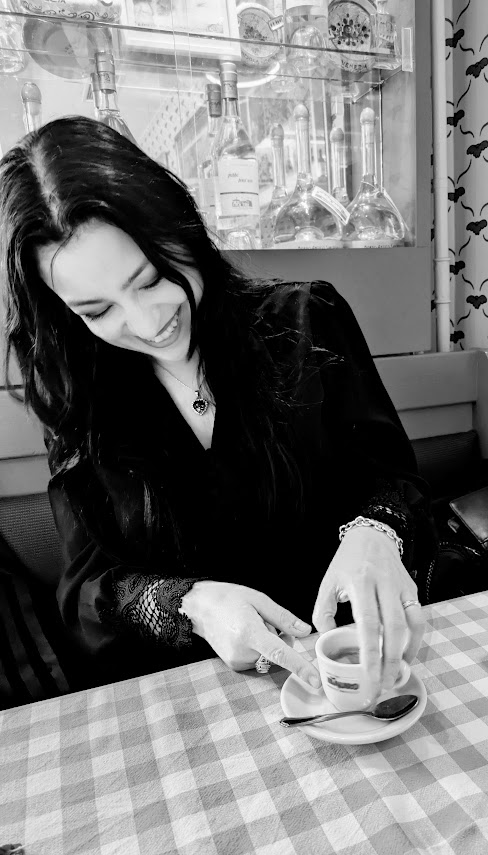
Speaking of crueler times… Once upon a simpler, crueler time, people actually asked each other out for a cup of coffee. Imagine that: boiling water, burnt beans, and awkward eye contact. Now you’d think suggesting such a thing is akin to asking someone to sign over their soul. One must admit, though, that would at least be more efficient. And yes, I’m always very happy — sometimes even ashamedly smiling — at a cup of espresso. Don’t tell anyone.

     Regretfully, the world has managed to make one of the cheapest, most accessible drinks into a social Everest. Everyone’s a wise guy with hypothetical rock-climbing equipment and perpetually no funds. People swipe, scroll, ghost, and then post essays about “intentional dating” yet can’t stomach the horror of sitting across from another breathing human and holding a cup. A cursed chalice of caffeine, apparently too much to bear.

Don’t get me started on the phrase “intentional dating.” One dates with an intention, good or bad. Why the redundancy? It’s the same affliction that compels people to say, “ATM machine.”

And what if you’re not dating, you ask? What if you just want friends, acquaintances, accomplices, or an alibi? Here’s my metric: if you invite me into your home, I’ll know who you are by whether or not you offer me a cup of coffee. It’s tap water and grounds, but it’s also a litmus test. If you can’t extend even that, then congratulations- you’re not thrifty, you’re spiritually poor.

And yes, I can already hear the protests: “But what if we’re not a coffee-drinking house?” Congratulations, you’ve chosen asceticism. That’s your lifestyle, not my problem. Keep your herbal infusions. This is about coffee, the universal offering, the dark currency of basic human decency. If you don’t drink it yourself, fine. But a true host still keeps a jar of grounds in the pantry, the way one keeps candles for a blackout. Cue the classist police to scream into the void. Alas, I don’t need artisanal pour-overs or beans blessed by monks in Ethiopia. A mug, a gesture, and a little bitterness (in the cup, not just in your personality) will suffice.

But maybe that’s the real gothic tragedy. People would rather pretend they’re above coffee than admit they’re afraid of intimacy. The irony? Coffee is both the cheapest escape and the most honest confrontation. You sip, you talk, you risk the silence. Nothing glamorous about it. Just heat, liquid, and the subtle realization that the person across from you may not even deserve your caffeine.

So yes, in this age of emotional bankruptcy, the measure of generosity is a cup. And if you can’t manage that, then maybe the darkness you carry isn’t romantic or friendly – it’s just empty.

Everything I Didn’t Want to See

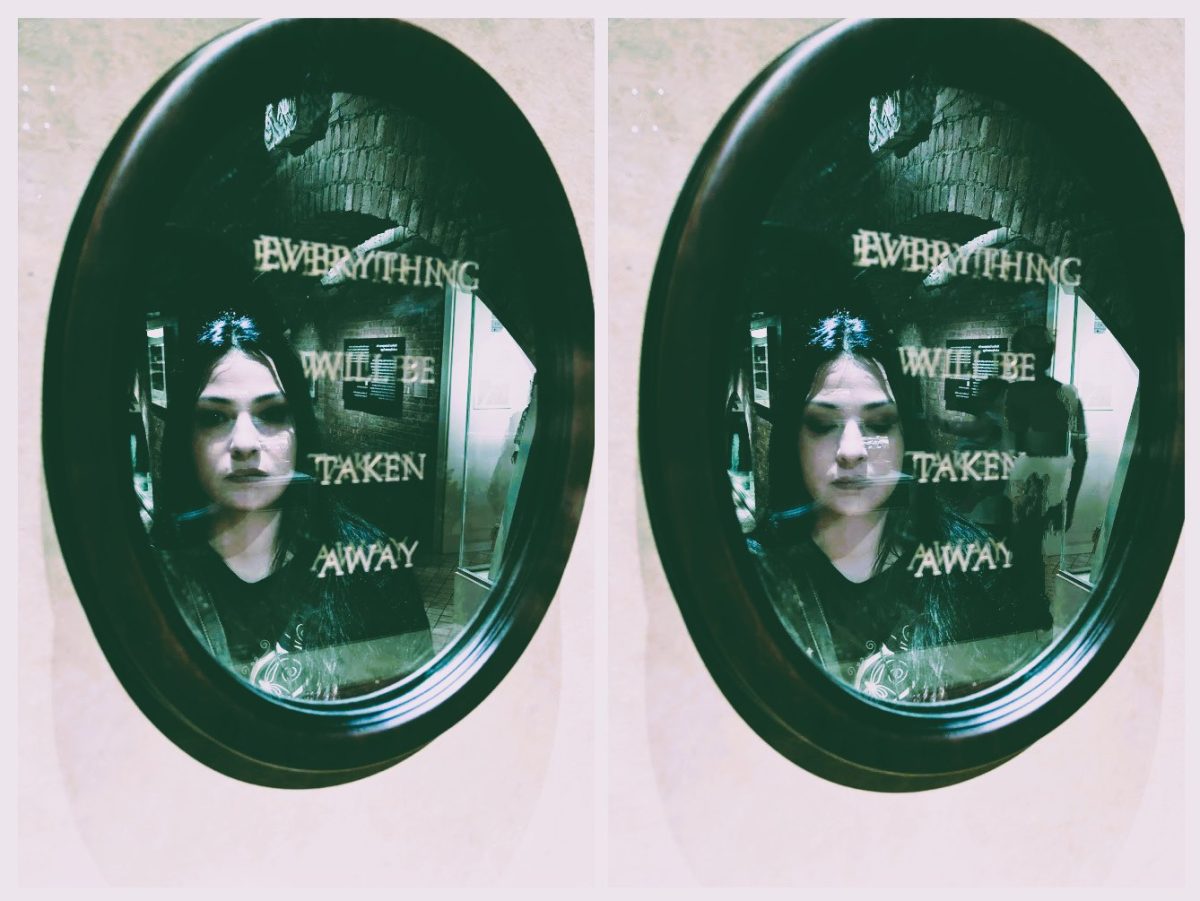
I didn’t expect a museum mirror to speak louder than most people in my life.

Framed in mahogany, engraved in gold, Adrian Piper’s Everything #4 waited quietly until I stood in front of it.

I took a photo. But it didn’t feel like a selfie. It felt like a warning.

It’s easy to forget how much we perform when we look into mirrors. Adjust. Pose. Smile. Hide. But this one? This one didn’t play along. It didn’t ask for aesthetics. It demanded honesty. The kind that forces you to see not who you want to be, but who you’ve been avoiding.

As I took a hard look at the phrase “Everything will be taken away”, I can’t help but wonder what conversation this piece of art is trying to strike with me. What was it igniting? Was it mocking me?

Last year, I watched a “golden opportunity” rot in real time because I wouldn’t script someone else’s redemption arc with my pen. They called it a project. I call it a performance, and I wasn’t about to play supporting ghost for someone’s hero complex. The money? Irrelevant. The contract? Blessedly airtight, like a saint’s relic under lock and stained glass.

Or was it the fact that, before one surgery could even happen, I had to make sure a mysterious mass wasn’t something dramatic. It wasn’t. Just two surgeries in three months. My body didn’t get a break. Neither did my spirit.

Speaking of spirit, you know who decided to become one? My best friend and gossip bitch. He left this plane with a kind of audacity I still haven’t forgiven. I now keep a list of songs and bands I can’t play unless I’m ready to fall apart.

Oh, Maureen. It could be worse. You have your health, your family, and a roof over your head.

That’s what I always tell myself. Not today though. I don’t want to think about silver linings. I don’t want to think about glasses half full. How could I when I am left with lead linings and empty glasses?

Shall I be grateful my world only half-collapsed instead of imploding entirely? It’s not comfort. It’s dismissal dressed as wisdom.

How egotistical of me?! As I look in the mirror, I realize it’s a cheap way to dodge my own pain while sitting in the discomfort of it.

I tell no one.

I say nothing.

Everything will be taken away.
When, though?

The Silent Threat

The Silent Threat:
Why Mediocre People Clap the Loudest- for Anyone but You

Yes, I said it. Mediocre.

I’ll be the first to admit I’m mediocre at plenty of things, sewing being one of them. Patterns might as well be cursed scrolls sealed in Latin. But every year, I throw myself into cosplay for New York Comic Con like it’s a life-or-death mission. Last year was a masterpiece of poor timing. I had two surgeries, crutches, and a headpiece that doubled as a medieval torture device. Did I wobble into Comic Con like a half-bedazzled disaster? Yes. Was I proud? Also, yes. Mediocrity with theatrical flair is still a win in my book.

This whole thing pushed me out of my comfort zone. I uploaded a few photos after the Con and didn’t think much of it. The next morning, I woke up to a wave of sweet reactions from friends. No one knew I was on crutches because, frankly, I wasn’t trying to collect pity points. I just wanted to look like a dramatic Gorgon. A few asked what I used, and I even shared some before and after pics of the process. I’ve never been one to hoard knowledge. I was wrong.

One friend, in particular, went full interrogation mode. They had a Halloween party coming up and wanted tips. I didn’t mind sharing. I wasn’t about to treat my Amazon links like launch codes. Later that night, while scrolling through my comments, I noticed something: that same friend hadn’t reacted or commented on my post. Nothing. Huh?

Out of curiosity, I checked last year’s post. Again, no engagement. Apparently, my handmade armor and bruised dignity weren’t worth a single emoji. Ah, intéressant…

Maybe I was bored, or maybe my crutches gave me time to think, but the pattern clicked. This person never congratulated me on anything. Meanwhile, I clapped for them like a possessed seal at every mildly impressive thing they did. It wasn’t because I expected something back. That’s not how I operate.It’s simply something I just do because support is a habit for me.

I felt like emotionally spiraling and decided to scroll through their page and, surprise, they were hyping up content creators and celebrities like they were being paid in exposure and black lipstick. My book had launched around the same time they congratulated someone else for something I can’t even remember.

Here’s my theory

No, I’m not a therapist; I just have a highly suspicious mind and a penchant for overanalyzing human behavior. No, it has nothing to do with my star sign. Some people prefer to support the ultra-successful due to the fact that those people are aspirational and untouchable. It’s the sick idolatry of these people being on another level. They exist on Olympus. They’re not people; they’re a myth. Why? There’s no real threat or comparison. They become brands, not individuals. They become icons to project fantasies onto. Think about that the next time you win a baking competition.

Let’s flip the coffin lid the other way.

People also love to root for those they consider beneath them. That support often comes disguised as empathy, but sometimes it’s just pity with a smug ribbon. These folks are seen as “deserving” because they pose no risk. But give them a little momentum and watch that support shrivel like a Victorian bouquet.

Performative support vs. real encouragement

Now, before I tackle this point like a line-backer, I know some people lack nuance; this only applies if you’ve actually shown up for these people. I’m not talking about random followers. I’m talking about people you’ve poured into.

Performative support is a quick-like, somewhat a vague “you go girl,” or worse, a private DM full of praise they’re too cowardly to post publicly. I call that support in the shadows. Gothic, but not in a good way.

Real encouragement? That’s different. It’s public. It’s consistent. It takes effort. It’s not afraid to stand next to your spotlight instead of resenting it.

The classic defense

“I’m just being real.” Pulease! With whom? If you’re not offering support, advice, or a “damn, you did that,” then you’re not being real. You’re just feeding your ego in a cloak of faux authenticity.

This type of behavior manifests as backhanded compliments, side-eyes, or my personal favorite – total silence. It’s the emotional equivalent of a fog-covered grave, again, not in a Gothic fun way.

Society doesn’t just tolerate envy. It rewards it.

Because envy toward someone close enough to compare yourself to? That’s relatable. That’s marketable. That’s …ugly.

You don’t need the applause of the insecure

Regardless of what you’re doing in life, whether it’s baking, starting a vegan butcher shop, or just posting pictures of your iced coffee, you don’t need the applause of the insecure. Some people can’t clap for you because your rise, or your crawl upward, makes them realize they’re still standing in the same place, arms crossed, doing nothing but watching.

Clarity On the Ground

My morning routine now consists of crying for three minutes and twenty-one seconds. Once I went over the two-minute marker, I had to start timing myself. I mean, a girl has places to be and obligations to uphold.

I finish up by gently placing a cold compress over my eyes for five minutes whilst listening to whatever flavor of musical angst I long for that morning. I usually pour myself my first cup of black coffee for the day and proceed to conceal the emotional baggage under my eyes. I have unwillingly developed a new concealer routine.

One could say that this has become my daily mourning routine.

Occasionally, trials and tribulations have a way of knocking us down.

It’s okay not to get up quickly. At times, I simply lie still on the ground.

Do I open myself up to more blows? Yes.

But the better question is: Can I take a beating? Can you take a beating?

We must embrace the pain of being motionless, allowing whatever jabs are thrown to tire themselves out. Soon, the jabs will dwindle, and we’ll be able to rise again.

Be that as it may, if you decide to go on a rampage, might I suggest a baseball bat—or a silent nervous breakdown?

There are also types of blows that come from thanklessness and indifference.

These blows give you clarity whilst lying down on the ground. It’s the kind of clarity akin to an out-of-body experience.

One would think to themselves:

Did that really happen?

Is that what I am to you? Nothing?

Loyalty in the midst of pain should go both ways.

When it doesn’t, that trust is shaken.

But here comes the question: What were you offering in the first place?

Nothing.

That’s what you and I may be to some. However, it’s not our burden to carry.

And so, I lie there. Still. Bruised, caffeinated but not broken.

My morning routine now consists of crying for three minutes and twenty-one seconds. Once I went over the two-minute marker, I had to start timing myself. I mean, a girl has places to be and obligations to uphold.

I finish up by gently placing a cold compress over my eyes for five minutes whilst listening to whatever flavor of musical angst I long for that morning. I usually pour myself my first cup of black coffee for the day and proceed to conceal the emotional baggage under my eyes. I have unwillingly developed a new concealer routine.

One could say that this has become my daily mourning routine.

Occasionally, trials and tribulations have a way of knocking us down. It’s okay not to get up quickly. At times, I simply lie still on the ground.

Do I open myself up to more blows? Yes.
But the better question is: Can I take a beating?
Can you take a beating?

We must embrace the pain of being motionless, allowing whatever jabs are thrown to tire themselves out. Soon, the jabs will dwindle, and we’ll be able to rise again.

Be that as it may, if you decide to go on a rampage, might I suggest a baseball bat—or a silent nervous breakdown?

There are also types of blows that come from thanklessness and indifference. These blows give you clarity whilst lying down on the ground. It’s the kind of clarity akin to an out-of-body experience.

One would think to themselves:
Did that really happen?
Is that what I am to you? Nothing?

Loyalty in the midst of pain should go both ways.
When it doesn’t, that trust is shaken.
But here comes the question: What were you offering in the first place?

Nothing.
That’s what you and I may be to some.
However, it’s not our burden to carry.

And so, I lie there. Still.
Bruised, caffeinated but not broken.

Stop Pluralizing with Apostrophes

I had a whole article written out for this month’s blog. I had taken my time to write a rough draft only to be sidetracked by my own sense of urgency. Call me an elitist, grammar Nazi or whatever term the internet world has bestowed upon us lately. I am not even going to touch on the subject of dyslexia nor the topic of colloquialism. I won’t even get into the boring details of how a language is a form of orderliness in a system used by humans as a means of communication-based on speech, writing, signs, and gestures. I will also not get into how languages have evolved, nor will I get into the anthropological themes of civilizations and cultures. All the aforementioned are not my premise. I will, however, mention that the orderliness of language is its grammar and its free components being vocabulary.

Now let’s divert back to the grammar part and how it creates a structure for a language. Why has it become socially acceptable to use improper basic grammar? I say ‘basic’ for there are certain things that should come naturally to us after middle school. I am not talking about using commas in long sentences, homonym confusion, ending sentences with prepositions, or linking ideas with conjunctions. There are so many rules in grammar. This is where professional editors come in to take over the show. See? I am even getting sidetracked whilst writing this. The soliloquy of my being, to be or not to be. To pluralize with an apostrophe or not to pluralize with an apostrophe?

In a world where people’s mother tongue is English, some can’t seem to grasp the difference between your and you’re. The first is a possessive adjective and the latter is

a contraction of ‘you are’. It always helps by eliminating the contraction of the latter just to get a hang of things. For example, you want to tell someone that they aren’t the sharpest and you want to convey that via text. You don’t know whether to use your or you’re. Just ask yourself, does this person have dumb or is dumb? This person is dumb, right?

Your dumb means they have dumb

I have divagated yet again.  My issue of the moment is apostrophes being used to pluralize everything and anything. The plural of Karen is Karens, not Karen’s. When you apostrophize Karen that way, you’re forming a possessive of the name, i.e., Karen’s dog. The plural of idiot is idiots, not idiot’s. Apostrophes are not to be used to pluralize nouns of any kind. What I would like to know is who came up with this and why is everyone emulating this behavior? Is it considered elitist to not want to see the pluralization of nouns with apostrophes? Who came up with the idea that only elitists use proper grammar? Have these people even met elitists? Or have we resolved to the fact that utilizing terminologies that exude aristocratic undertones will mask our shortcomings as a collective? A resolve to absolve, dare I ask?  Look at me, I sound like those elitists that everyone’s been talking about.