
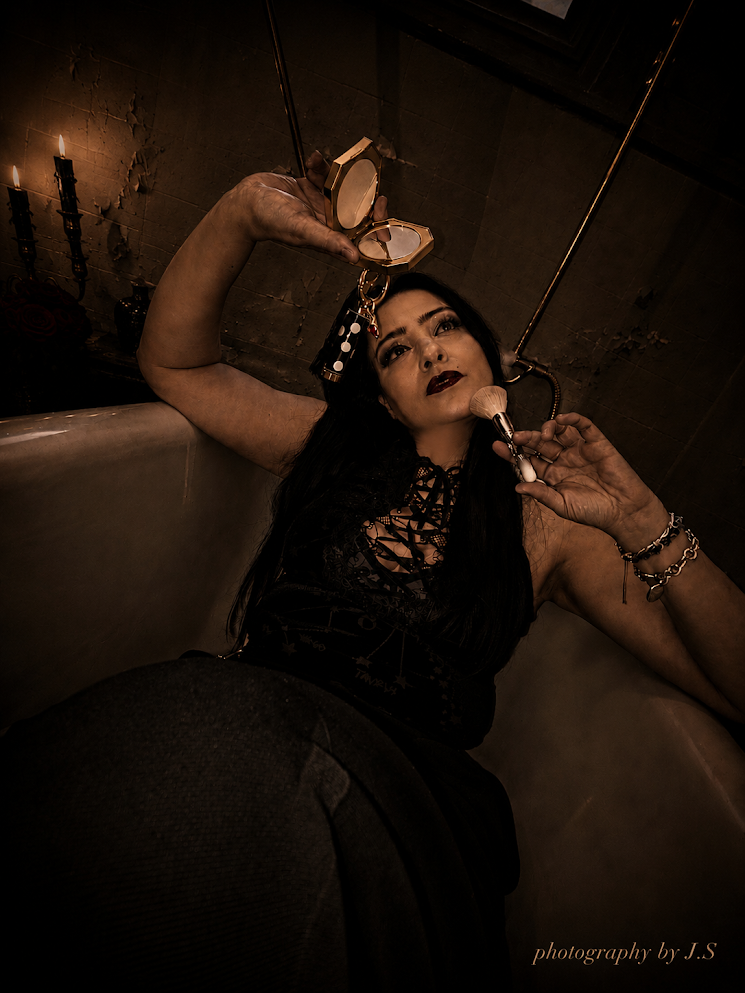
The Social Performance of “Natural”

I wear makeup quite a bit. Sometimes it’s full glam goth. Sometimes it’s subtle office makeup. The only time I’m usually barefaced is at the gym and even then, if I still have eyeliner on, it probably just means I came straight from work.

Over the years, I’ve noticed a very specific social interaction that seems to happen almost exclusively with other women. If I happen to be wearing makeup, there’s occasionally someone who will immediately announce, completely unprompted:

“I don’t wear makeup.”

The funny part is… before they even say it, I can usually tell.

Also, I don’t carry trophies or cookies in my bag.

What always fascinates me is that makeup was never the topic of conversation to begin with. We could be discussing the economy, jury duty, a parking ticket, or the collapse of civilization itself, and somehow we still arrive at:

“I only wear lip gloss.”

Wonderful. Ring the cathedral bells!

Sometimes the follow-up question is:

“What’s the special occasion?”

As though eyeliner automatically means I’m on my way to a gala, a séance, or the burial ceremony of a minor aristocrat. The interaction itself is what makes it strange. Nobody asked. The conversation was moving along perfectly fine before we suddenly took a detour into a press conference about concealer. What’s even more interesting is that these comments rarely happen in a vacuum. They usually appear in the presence of a woman who is visibly wearing makeup, which is why the interaction can sometimes feel less like casual conversation and more like subtle social positioning.

Because-ding ding ding– the statement is usually not about makeup at all.

It’s about identity.

For some people, “I don’t wear makeup” quietly translates into:
“I’m lower maintenance.”
“I’m more natural.”
“I’m not trying that hard.”
“I’m above all of this.”

None of those things is necessarily true, of course, but people often use appearance choices to communicate personality traits they want associated with themselves.

And sometimes, if we’re being honest, the comment functions as a kind of preemptive defense mechanism. If someone feels slightly insecure about how they present themselves, reframing it as a deliberate philosophy allows them to control the narrative before anyone else can interpret it for them.

That instinct, however, reveals something interesting.

People who are genuinely comfortable with their choices usually don’t feel the need to announce them to strangers.

Whether someone wears a full face of makeup, tinted moisturizer, or absolutely nothing at all, secure people usually just exist without making their appearance a personality trait. That’s what makes those random declarations feel so strange. Nobody was discussing makeup in the first place, yet somehow we’ve ended up holding a town hall meeting about concealer.

With men, the dynamic is usually different. Sometimes it’s clumsy curiosity.

Sometimes it’s the familiar:
“I prefer women without makeup.”An opinion often delivered from behind a meticulously sculpted beard and enough beard oil to lubricate industrial machinery.

Many men who claim to prefer “no makeup” are usually picturing a very specific kind of makeup they don’t recognize as makeup. What they often mean is: “I prefer makeup that looks effortless to me.” Which, ironically, usually requires effort.

Psychologically, comments like these often have very little to do with cosmetics themselves. In some instances, it’s subtle status signaling. Sometimes it’s an attempt to project authenticity. Occasionally, it’s mild negging disguised as honesty. And very often, it’s simply people attaching moral value to appearance choices that are ultimately neutral.

That’s the interesting shift we’ve watched happen culturally.

Women used to be judged for not wearing makeup because it supposedly meant they weren’t “put together.” Nowadays, women are sometimes judged for wearing makeup because it supposedly means they’re vain, insecure, artificial, or trying too hard.

The expectations changed, but the scrutiny never left.

Same courtroom. Different charges.

At the end of the day, makeup is not a moral issue.

Wear makeup. Don’t wear makeup. Smear yourself in bronzer like a rotisserie chicken. I genuinely do not care. But if nobody asked, maybe we can retire the strange little announcements.
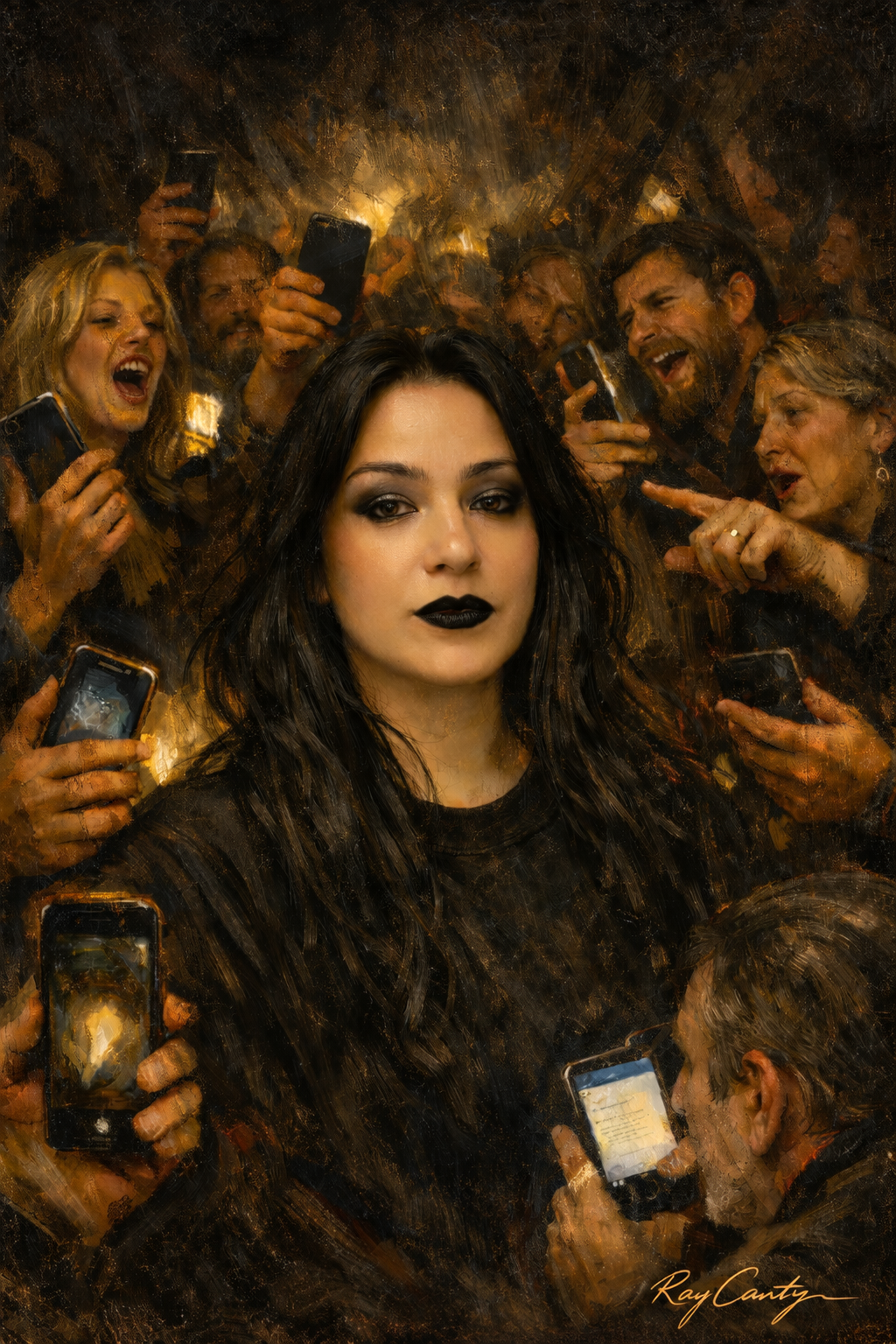
We Need to Start Calling People Stupid Again

I find myself living in a strange moment in history where access to information has convinced many people that they possess expertise. A few searches here and there, a skim of a couple of articles—which I’m fairly certain most people don’t read properly anyway, because let’s be honest: people don’t read for comprehension anymore. They read for validation. Or maybe they watch a short video explanation that very few people actually make it to the end of. Suddenly, people with the attention span of a houseplant speak with the same confidence as those who have spent years studying a subject.

Searching, it turns out, is not the same thing as understanding.

God forbid you tell them that real expertise has always required something more demanding than curiosity and a search engine. Historians spend years learning how to read primary sources, understand historical context, and interpret conflicting accounts. Physicians train for years before diagnosing even the most common conditions. Scientists spend decades learning the methods that allow them to distinguish correlation from causation. Writers spend years learning how to research, structure arguments, and communicate ideas clearly. Yet the internet has loudly encouraged a cultural shift where familiarity with information is mistaken for mastery of it.

I experienced a small version of this temerity recently. After my father passed away early last year, my body began reacting in ways I had never experienced before. Insomnia returned like an old acquaintance who never learned how to leave. Night sweats felt like waterboarding sessions conducted by my own paralysis demon. Crying outbursts appeared out of nowhere—sometimes in the middle of a Macy’s cosmetic department.

To be fair, some lipstick swatches are criminal.

I should also mention that I’m not normally a crier.

The loss of simple pleasures, the inability to function like the well-oiled Victorian steam train I had previously convinced myself I was—it all started to add up. Grief, as it turns out, doesn’t just live in the mind. It often manifests physically.

After running a few tests, my doctor concluded that I was dealing with anhedonic depression. The tests came back normal. Human, even. Once treatment began, the physical symptoms gradually disappeared. I can’t deny that my body and face changed during that time, but I’m almost back on track now.

Anyhoo.

During this period, one friend became absolutely convinced she knew what was happening. Her first diagnosis was perimenopause. When that theory didn’t quite stick, the diagnosis quickly pivoted to PCOS. Yes—PCOS, the magical word women have been using the last couple of years to explain every symptom and inconvenience under the sun. The interesting part is that I was already under medical care and had discussed everything with my doctor.

Now, before someone’s polyester panties twist themselves into a catastrophic knot, let me say this clearly: there is nothing wrong with caring about someone’s health or asking questions. Concern is human. But there is a difference between expressing concern and insisting on a diagnosis after someone has already told you they are comfortable with the care they are receiving. Eventually, I had to tell her to back off because subtle hints, polite deflection, and my most reserved and couth responses were apparently not getting through.

This is what the internet has produced: the confident amateur. Someone who has gathered enough fragments of information to feel authoritative, but not enough depth to understand the limits of their knowledge.

And frankly, I think this is where we’ve gone wrong culturally. Somewhere along the way, we decided it was impolite to tell people when they are simply out of their depth. Instead, we nod politely while someone with fifteen minutes of Google research explains medicine, history, economics, or whatever topic they discovered that afternoon. We replaced honesty with endless politeness.

But sometimes the problem isn’t a difference of opinion. Sometimes the problem is that someone is being stupid. Not cruelly stupid. Not maliciously stupid. Just confidently, aggressively uninformed. And occasionally that deserves to be called what it is.

Because there is a difference between curiosity and competence. The internet has made the first easier than ever and the second somehow rarer. Access to information is one of the greatest achievements of the modern world. We carry the sum of human knowledge in our pockets. Unfortunately, we also carry the illusion that skimming that knowledge somehow makes us experts.

The internet is a remarkable tool. It can help you find information in seconds and expose you to ideas you might never have encountered otherwise. What it cannot do is replace years of study, training, experience, and intellectual humility. Historians still study sources. Doctors still study medicine. Scientists still study data. Writers still study language and ideas. Google studies your search history so it can sell you magnesium supplements and hormone-balancing tea.

Curiosity is admirable. Asking questions is healthy. Suggesting possibilities out of concern is human. But when someone tells you they are already under professional care and comfortable with that care, the respectful response is not to double down on your internet diagnosis. The respectful response is to step back.

And occasionally—when someone refuses to step back and insists on lecturing others about subjects they clearly do not understand—it may be time to revive a lost social skill: telling people they are being stupid.

Politely, if possible. Directly, if necessary.